

Case Study: Implementation of Intelligent O&M Platform for a Macao‑based Public Water‑Supply Enterprise
The enterprise, founded in 1935, is a private company dedicated to delivering safe, stable and high‑quality water supply services. It underwent corporate restructuring in 1985, with its parent company being an international water group, and signed a 25‑year exclusive water‑supply concession contract with the local government. Thanks to its outstanding service performance, it renewed a 20‑year public‑service franchise contract for water supply with the local government in 2009, valid until July 2030.
Customer Pain Points
With the deepening of the enterprise’s digital transformation, reliance on IT infrastructure, network environments and information systems keeps rising. The traditional decentralized, manual IT operation and maintenance management model has gradually exposed the following prominent issues:
- Inconsistent O&M data: Data from various monitoring tools and O&M platforms is fragmented without a unified view. It is difficult to quickly grasp the overall IT operational status, resulting in incomplete and inaccurate decision‑making references.
- Chaotic device‑asset management: Ledgers of software and hardware assets are scattered and poorly updated. Full‑lifecycle asset management is missing. Processes such as procurement, modification and decommissioning lack effective tracking, which easily leads to asset waste or security risks.
- Delayed fault detection and response: Reliance on manual inspections and passive fault reporting causes long fault detection time, difficult problem localization and low recovery efficiency, severely impairing business continuity and system availability.
- Fragmented network supervision: Centralized monitoring and performance analysis for network devices and link status are insufficient. Risks including abnormal traffic, unauthorized access and link failures cannot be detected in a timely manner, resulting in weak network security protection.
- Non‑standard O&M workflows: Processes for fault handling, change management and service requests lack standardized support. Work‑order circulation is disorderly with ambiguous responsibility boundaries, making it hard to guarantee O&M efficiency and quality.
Once the above‑mentioned problems trigger system outages, performance anomalies, network fluctuations or device failures, normal business operations will be directly affected, bringing efficiency losses and potential risks to enterprise operations. To fully resolve these pain points and build a standardized, intelligent and integrated IT operation and maintenance management system, the integrated IT O&M management project is launched. The project integrates six core capabilities: unified portal, monitoring center, CMDB configuration & asset management, automated O&M, network management and work‑order management, comprehensively covering full‑process enterprise IT O&M scenarios.
Solution
This project delivers an integrated intelligent IT O&M solution, deeply incorporating six core capabilities: unified portal, monitoring center, CMDB configuration & asset management, automated O&M, network management and work‑order management. It unifies IT monitoring, network control, asset O&M and process management, facilitating the digital upgrade of the enterprise’s O&M model, comprehensively improving overall IT O&M management capability, ensuring stable business operations, and strengthening the enterprise’s network and asset security compliance management.
Leveraging the monitoring center, the solution implements multi‑dimensional IT O&M monitoring. It conducts 7×24 real‑time monitoring on the operational health of various business systems, servers and devices. Customizable alarm thresholds are supported. It automatically identifies faults such as system stalling, performance anomalies and device offline status, delivers timely early warnings and message notifications, quickly detects O&M hazards and locates faults. It effectively improves the availability and stability of overall IT systems and mitigates business‑interruption risks caused by unexpected failures.
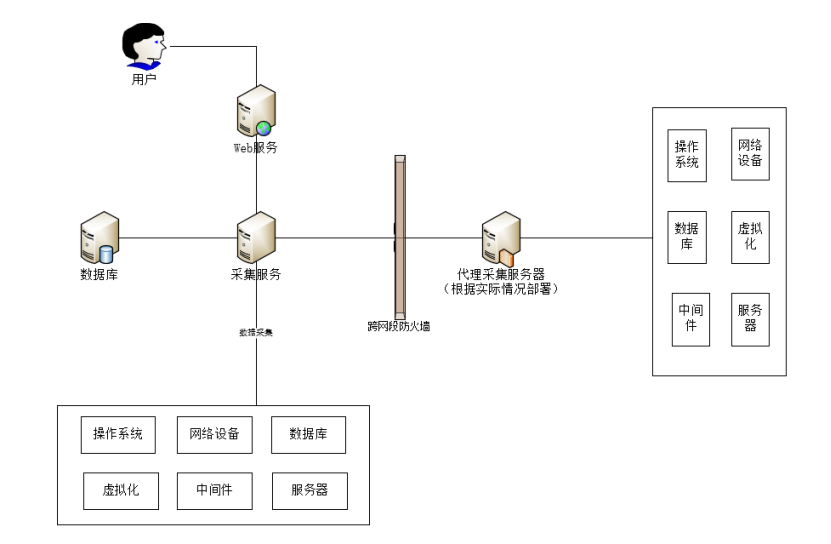
Overall Architecture
Redundant design is adopted to improve business continuity and system stability.
- Hierarchical and modular architecture with reasonably‑coupled modules facilitates expansion and maintenance.
- Three‑level management covering organizations, roles and users. User permissions are controlled via roles to ensure reasonable permission allocation.
- Bilingual switchable graphical interface with user‑friendly and easy‑to‑use design, meeting usage requirements of domestic and overseas users.
Unified Monitoring
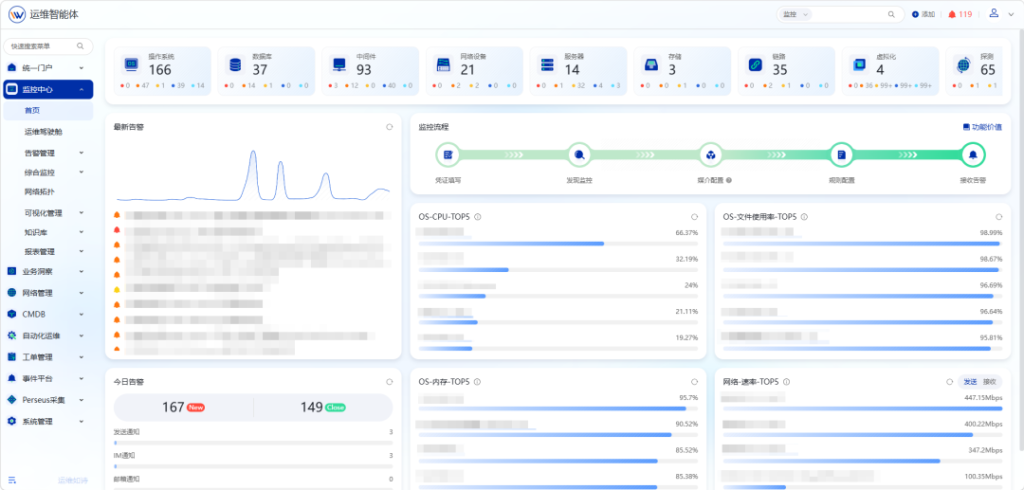
- Host Monitoring: Covers operating systems including cloud servers, CentOS and Windows. Key metrics: Exchange mail service on Windows hosts, CPU utilization, memory capacity, file system, network card speed, etc.
- Network Device Monitoring: Supports devices from mainstream vendors including Cisco, H3C, Huawei, Fortinet, Palo Alto, Radware and others. Key metrics: status of all ports, mainboard status, optical power attenuation, AP quantity, etc.
- Virtualization Monitoring: Monitors resources including Clusters, Datacenters, Datastores, Hypervisors and VM via the vCenter platform. It supports vCenter alarm integration and displays inter‑resource correlation status. Integrated with the monitoring platform, it presents the health status of virtualized environments in a unified view.
- Server Monitoring: Covers servers from brands such as DELL and Inspur. Data is retrieved via protocols including IPMI and SNMP. Key metrics: alarm integration, hard‑disk status, etc.
- Cloud Platform Monitoring: Manages cloud platforms such as Pingo Cloud and monitors dedicated lines of host types. Key metrics: connectivity, CPU, memory and disk usage.
- Module Integration with Monitoring Platform: All monitoring data converges on the platform to realize cross‑system linked alarms and visualized presentation.
Global View
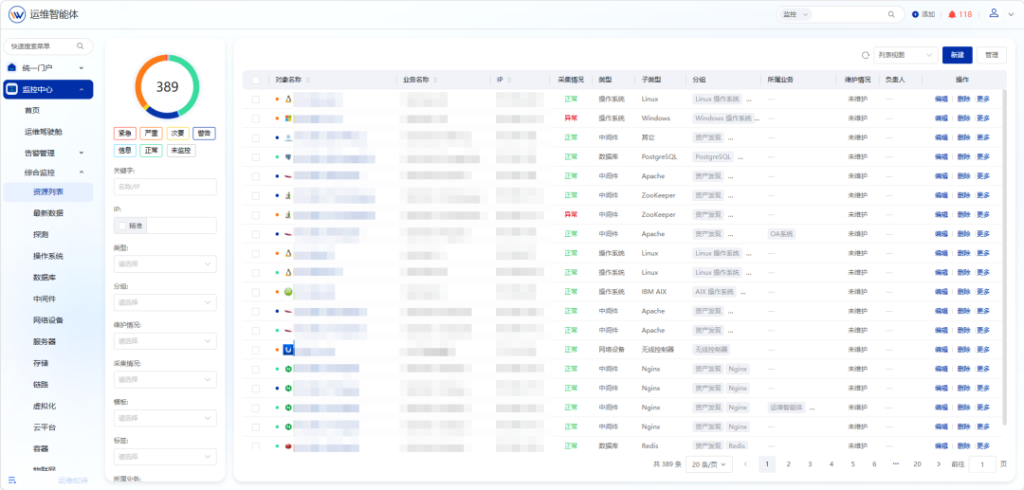
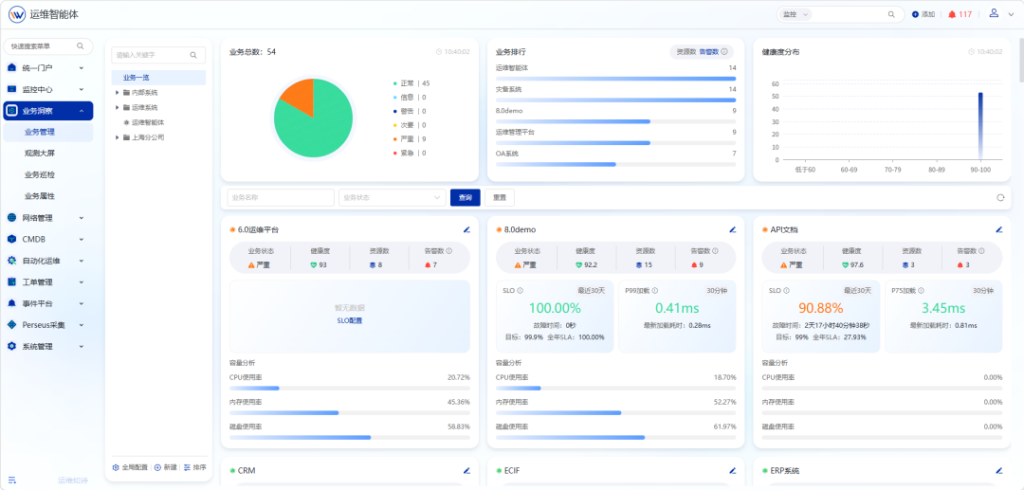
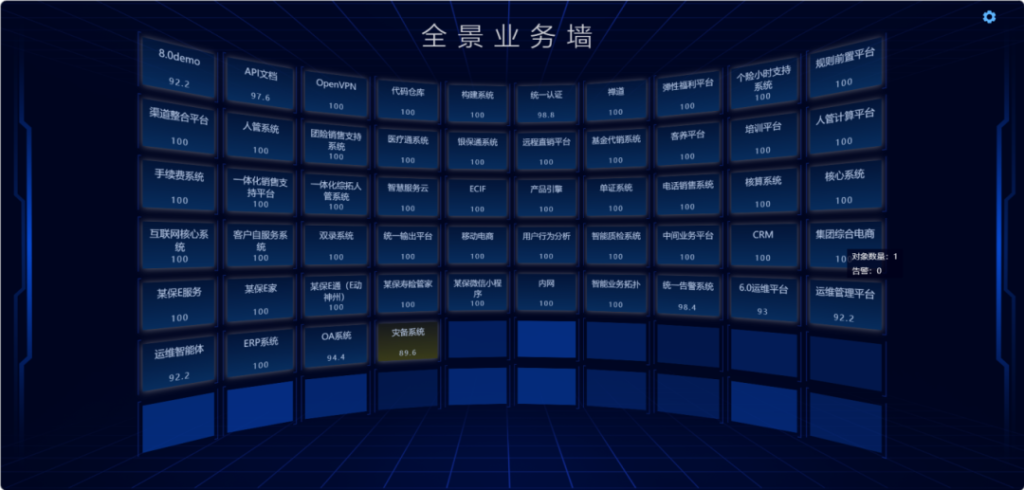
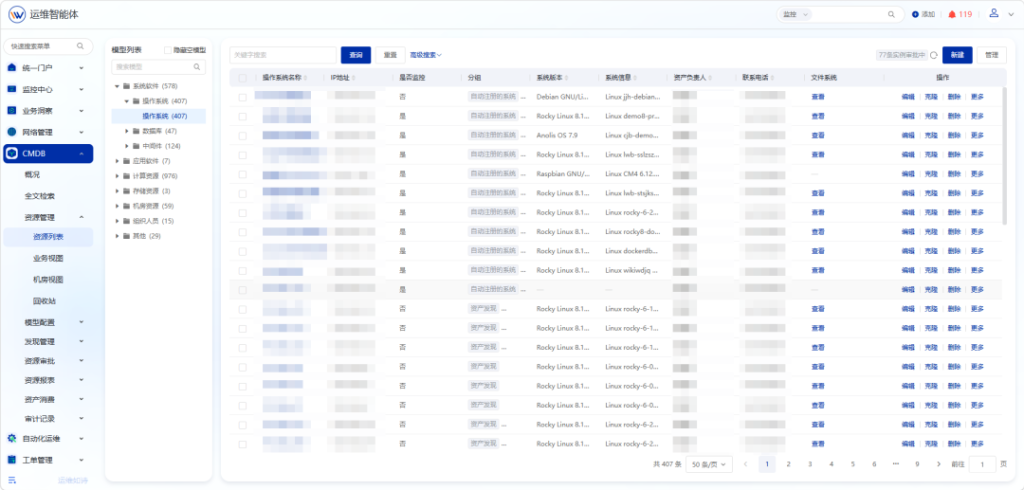
Hosts are managed by region in the resource list. Device locations can be quickly located when alarms occur. Business management realizes full‑business visualization, holistic ledger‑based governance, real‑time metric monitoring and advance early‑warning for fault avoidance.
Business Management
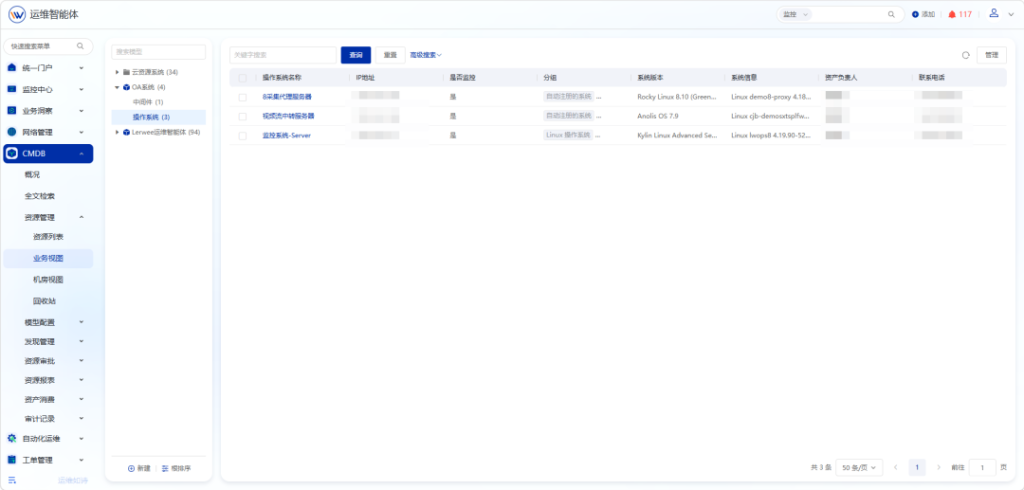
Complete mapping relationships between business services and underlying IT infrastructure (hosts, processes, ports, network devices) are constructed to realize full‑stack visualization and quantitative health‑status evaluation of business systems.
When business anomalies occur, the platform can rapidly identify fault impact scope. Combined with multi‑dimensional metric analysis and capacity views, it assists O&M personnel in accurate root‑cause judgment. This shifts O&M management from passive response to proactive prevention and resource optimization.
Configuration Backup
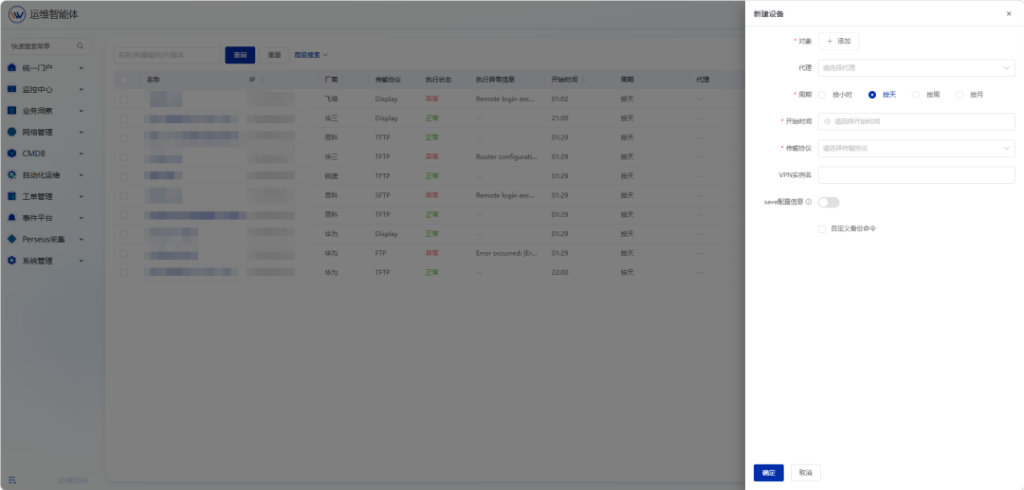
Regular backup of configuration files for user network devices is performed. Multiple transmission protocols (TFTP, SFTP, FTP, etc.) are supported, with compatibility for multi‑vendor devices to ensure secure and recoverable configuration data.
CMDB Asset Management
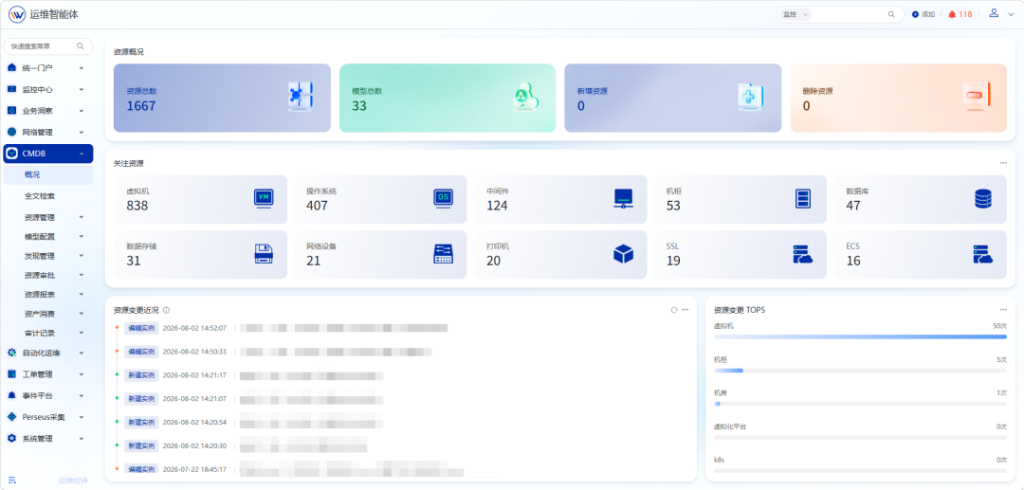
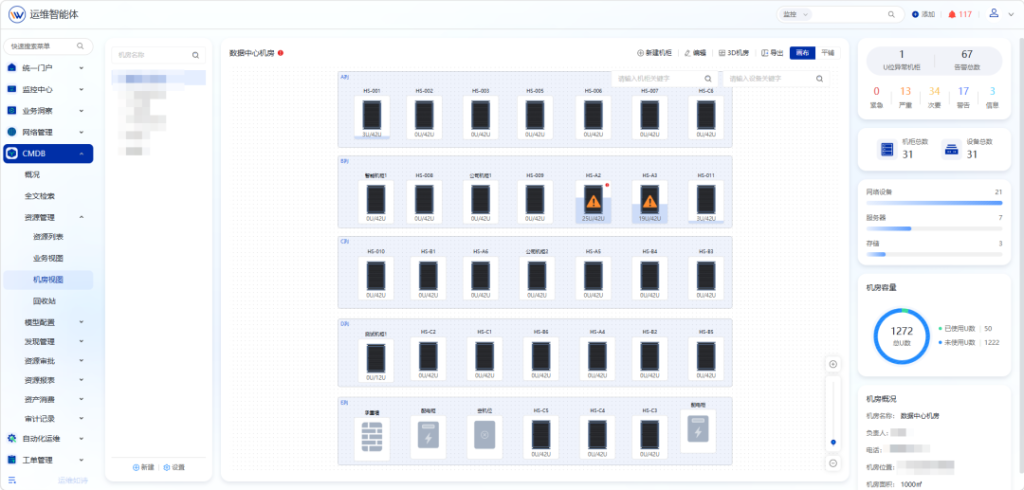
Instance relationships are displayed graphically, alongside a simulated 3D computer‑room large‑screen dashboard. Alarm‑triggered device locations can be intuitively shown on the 3D dashboard. Through the asset consumption function, users receive advance notifications prior to equipment maintenance expiration for decision‑making, so as to avoid asset‑related risks.
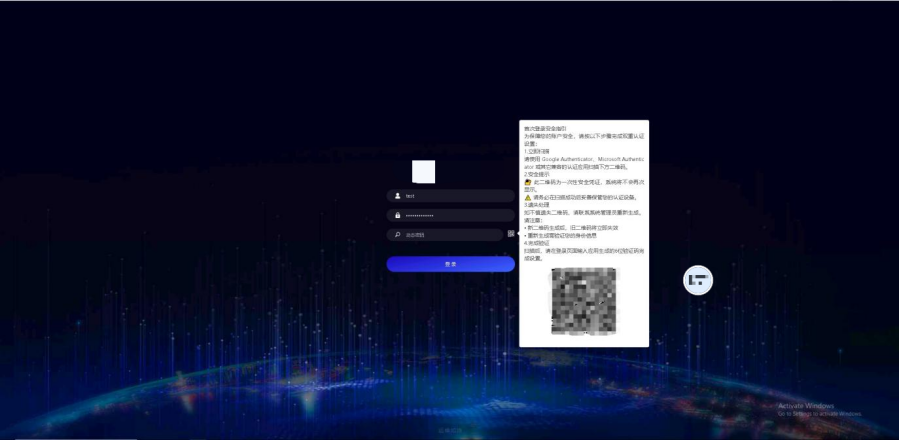
MFA Multi‑Factor Login Authentication
It greatly enhances account security, defends against mainstream network attacks such as brute‑force cracking and credential‑stuffing, and reduces risks of enterprise data leakage and asset loss.
Solution Value
- Improve system stability and business continuity assurance: Proactively identify and warn against hazards including system anomalies and device failures, and substantially reduce business‑interruption risks.
- Optimize IT asset management capability and overall O&M efficiency: Realize automatic discovery, dynamic tracking and unified archiving of enterprise software and hardware IT assets, covering the full asset lifecycle from procurement, deployment, modification and inventory to decommissioning.
- Cut enterprise IT operation and labor costs: Integrated capabilities including intelligent monitoring, automatic alerting and automated O&M enable proactive fault detection, advance risk warning and automatic task execution.
- Strengthen security control and enterprise compliance management: The network management module continuously monitors and analyzes status and traffic data of network‑wide devices and links, detects security risks such as network anomalies, unauthorized access and link failures in a timely manner. Together with security policy configuration and compliance auditing, it ensures a secure and reliable enterprise network environment.
- Case Study | IT Defense for Tertiary A Hospitals: Stable Medical Services Guaranteed
- Case Study | O&M Empowers Bank of China’s Digital Transformation
- Case Insight | O&M Monitoring Platform Construction in a Large Biopharmaceutical Enterprise
- Case Study: Monitoring & Network Management for a Listed Electronic Circuit Substrate Enterprise
- Example of Upgrading the Operation and Maintenance Monitoring System in a Third Class Hospital
- Case Study|Building Smart O&M System to Safeguard Core Clinical Services of Tertiary‑A Hospitals
 Chinese (China)
  Chinese (Hong Kong)